Introduction
Traditional education is no longer enough to prepare students for the demands of today’s workforce. Employers are increasingly looking for individuals who can apply knowledge in real-world situations, not just understand theory.
This is where simulation-based learning is transforming education.
What is Simulation-Based Learning?
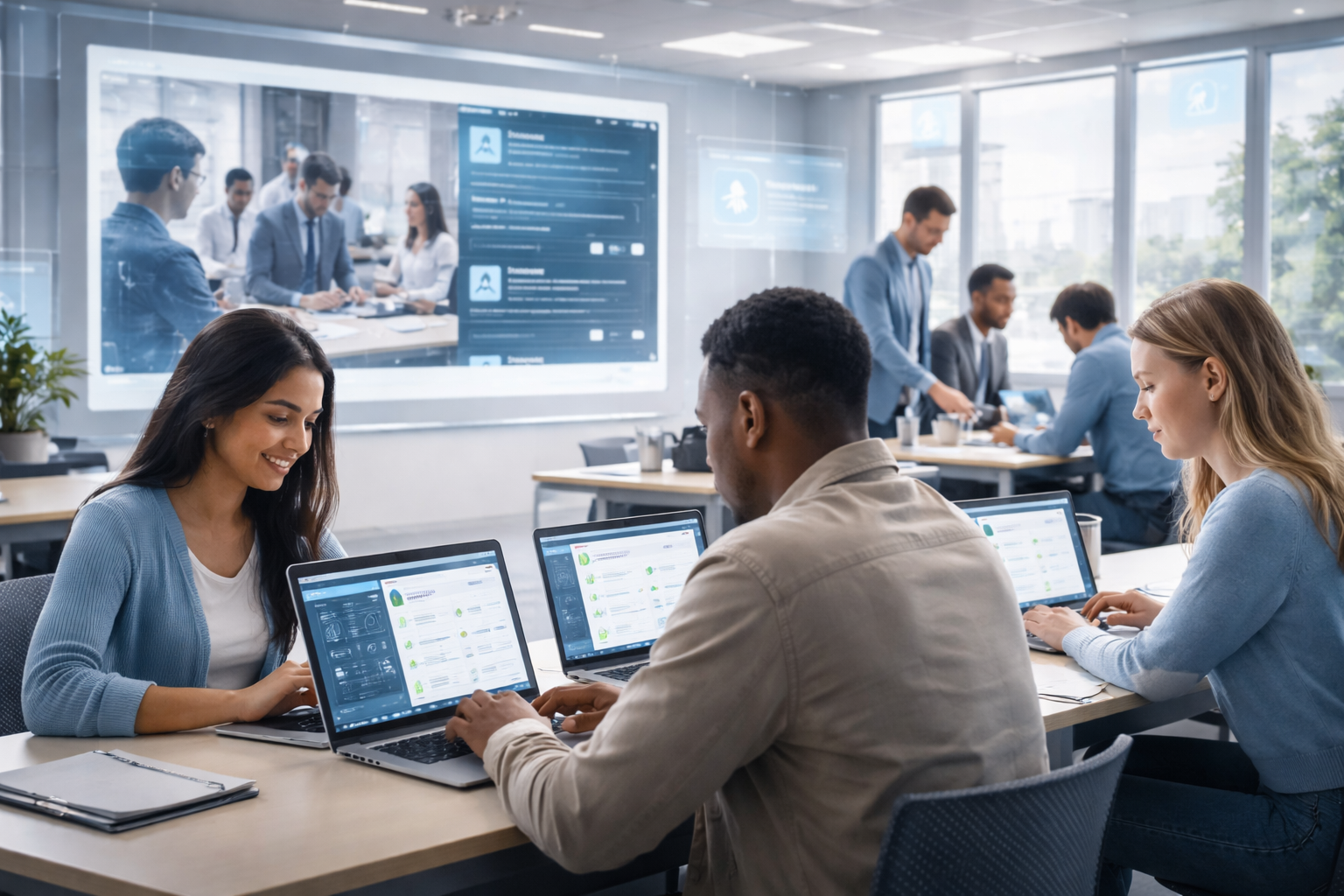
Simulation-based learning is an approach that allows students to engage in real-world scenarios in a controlled, structured environment. Instead of passively learning concepts, students actively participate in tasks that mirror real job responsibilities.
Through simulations, learners develop practical skills such as problem-solving, communication, and decision-making — all critical for success in modern careers.
Why Simulation is the Future of Training
Traditional training methods often rely on lectures, case studies, and theoretical assessments. While useful, they lack the hands-on experience needed to build confidence and competence.
Simulation-based training bridges this gap by:
- Providing realistic, job-like experiences
- Allowing learners to practice skills safely
- Encouraging active learning and engagement
This makes training more effective and aligned with real-world expectations.
Upskilling Through Real-World Experience
Upskilling is no longer optional — it is essential.
Organizations and universities are shifting towards learning models that focus on practical application, not just content delivery. Simulation-based learning enables continuous upskilling by allowing learners to repeatedly practice and improve their performance.
This leads to:
- Faster skill development
- Higher retention of knowledge
- Better job readiness
The Role of AI in Simulation-Based Learning
As technology evolves, AI is enhancing simulation-based learning by providing instant, structured feedback. Combined with human evaluation, this creates a scalable system where learners receive consistent and meaningful insights on their performance.
This combination of AI and human feedback ensures both efficiency and quality in training and assessment.
Conclusion
Simulation-based learning is redefining how education and training are delivered. By focusing on real-world application, it prepares learners not just to understand concepts, but to apply them effectively.
As the demand for practical skills continues to grow, simulation-based learning will play a critical role in shaping the future of education and upskilling.