
Job Simulations in Saudi Arabia and the UAE: How Candidates Prove Real Skills
11 November 2026 · 6 min read
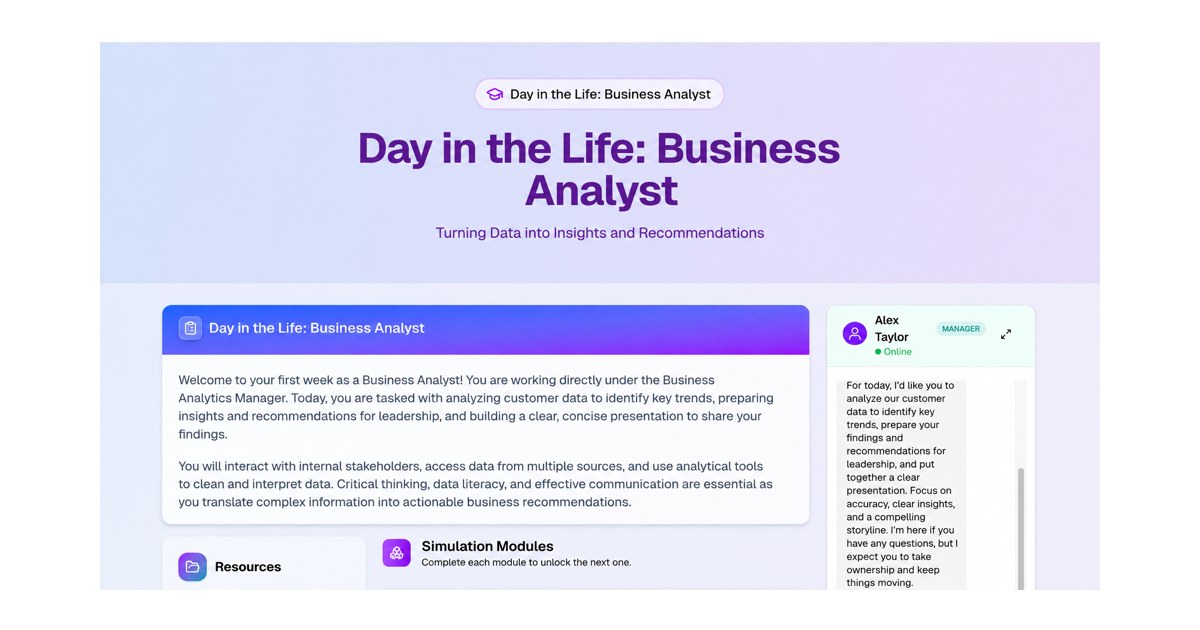
A CV says what someone has studied. A job simulation shows what they can actually do. Across Saudi Arabia and the UAE, where hiring is growing fast under Vision 2030 and the UAE's national talent programmes, job simulations are becoming one of the clearest ways to connect graduates with real work.
What is a job simulation?
A job simulation is an interactive scenario that recreates a real day in a specific role, such as a business analyst, HR specialist or marketing coordinator. Participants receive emails, data, requests from managers and tight deadlines, then make decisions and deliver work exactly as they would on the job.
Why job simulations matter in the Gulf market
- Employers want evidence of job readiness, not only grades.
- Universities need practical experience for students who cannot all access internships.
- Saudisation and Emiratisation goals call for faster, fairer ways to prepare national talent.
- Candidates gain confidence before interviews by experiencing the role first.
Job simulations vs. traditional assessments
Multiple-choice tests measure knowledge. Interviews measure how well someone talks about their skills. Job simulations measure behaviour: how a person prioritises, communicates, analyses data and handles pressure in a realistic setting. That makes the results far more useful for hiring and development decisions.
How students and graduates can use job simulations
- Try several roles to discover which career fits you.
- Use the feedback report to understand your strengths and gaps.
- Add completed simulations to your CV and LinkedIn as practical experience.
- Talk about specific scenarios and decisions in interviews.
Job simulations with SkillStep
SkillStep builds job simulations based on real workplace scenarios, with performance feedback on every decision. Students can explore individual simulations, while universities, training centres and government entities can run programmes at scale and track results.